Farm
Autumn drilling is complete at Povey Farm
21 October 2026 · Moss Valley Fine Meats
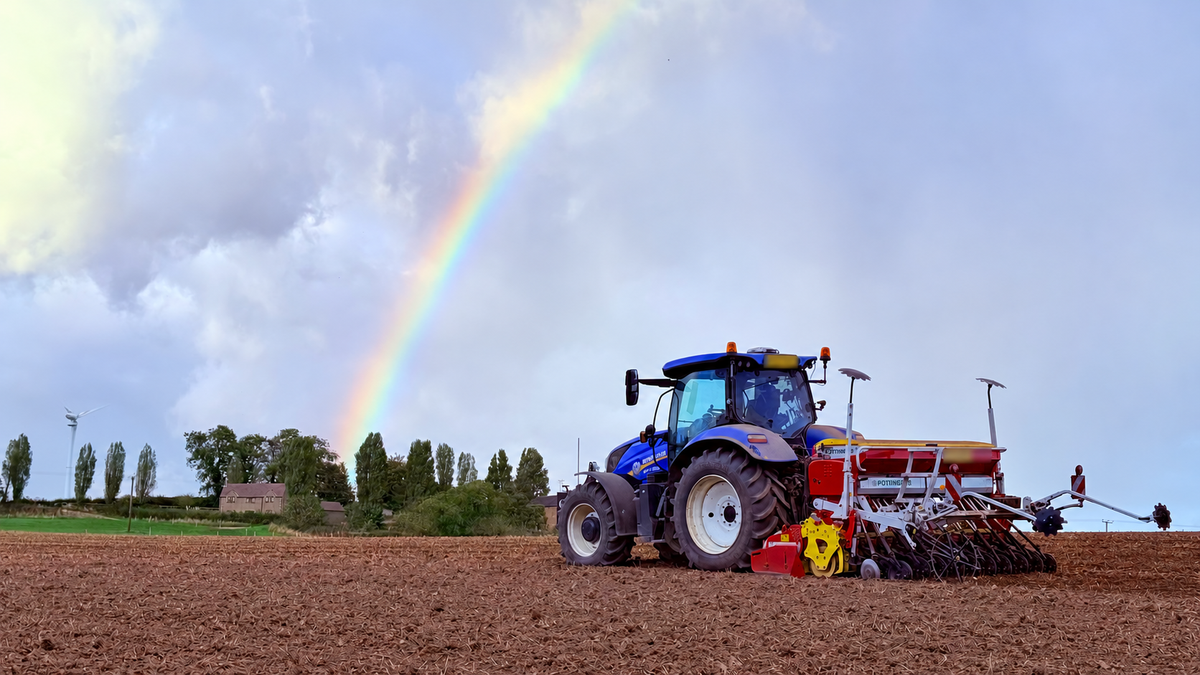
Autumn drilling is now complete at Povey Farm. After the planning, seed calculations and time in the fields, the next chapter is watching this season’s crops emerge and establish here in the Moss Valley.
There is plenty happening behind the scenes of Moss Valley Fine Meats. Alongside the livestock and butchery, growing crops is an important part of farm life—and the decisions made now help set the direction for next year’s harvest.
What do we mean by drilling?
Drilling is the farming term for sowing seed with a machine that places it in rows in the soil. Getting the seed into the ground is only one part of the job. The condition of the soil, the number of seeds sown and the care of the young crop all matter too.
This autumn’s crops include wheat, hybrid winter barley, rye and oilseed rape. The cereal drilling has taken place across September and October, with Snaithings drilled on 18 October. Some of the earlier-sown crops are already well established, while the most recently drilled wheat is only just beginning to germinate.
Why we chose these wheat varieties
Choosing the variety is one of the first opportunities to reduce the crop’s need for sprays. We chose RGT Griffin and LG Defiance with disease resilience, strong yields and the cost of growing the crop in mind.
A key reason for choosing RGT Griffin was its resistance to barley yellow dwarf virus, or BYDV. This virus is spread by aphids and can damage cereal crops. Building protection into the variety means our plan is to grow Griffin without insecticide sprays for BYDV control. It is a practical way to reduce insecticide use and help protect beneficial insects in our fields.
Both varieties have performed strongly in trials without fungicide treatment. These “untreated yields” give us a useful indication of how well a variety can perform under disease pressure using its own resistance. That was an important part of our choice: we want crops that give us more scope to reduce fungicide spending while maintaining a worthwhile harvest.
We will still monitor disease and tailor any fungicide applications to the season. The aim is to use the crop’s natural strengths to reduce the inputs it needs. Avoiding unnecessary sprays can mean less pesticide use, fewer tractor passes where a separate trip is avoided, and lower fuel and application costs. It is an approach intended to benefit both the environment and the farm’s bottom line.


Starting with the soil
Our establishment plans have centred on giving roots a good start while avoiding unnecessary work on our heavier soils. The approach is to address compaction where it genuinely needs attention, prepare a suitable seedbed, then drill and roll where conditions allow.
Each stage has a purpose. Loosening compacted ground can give roots room to explore; discs and a press help prepare and firm the seedbed; the drill places the seed; and rolling, when appropriate, improves contact between seed and soil. That contact helps the seed take up the moisture it needs to germinate.
The aim is a seedbed that supports even establishment without working the ground more than necessary. The field conditions have to guide the decisions.

Why we calculate the seed rate
A kilogram of one seed lot can contain a very different number of grains from a kilogram of another. We therefore look at seed size and the number of seeds per square metre, rather than simply using the same weight across every field.
For example, our Long Storth calculation for LG Defiance worked out at around 340 seeds per square metre from 200kg of seed per hectare. At Snaithings, RGT Griffin went in at 183kg per hectare—around 426 seeds per square metre. Although the weight was lower, the smaller grains meant there were more seeds.
These are field-specific decisions. Drilling date, germination and the establishment we expect all help shape the calculation. The aim is a well-established crop with room to develop.
Seed treatment: helping the crop get started
Seed treatment is another part of the establishment plan. A treatment applied to the seed before drilling has a different job from nutrition applied to the growing crop later. Depending on the product, seed treatments can help protect against particular diseases or provide nutrients close to the emerging seedling.
That is why we look at what is already on the seed alongside the wider crop plan. Treatment, seed quality and a suitable seedbed need to work together; none replaces the others.

Earlier-sown crops are already growing
A walk around the farm shows how different the fields can look at this point in autumn. The barley in Big Storth and the rye in Front of House already have visible rows of green growth. These photographs sit alongside the newly germinating wheat in Snaithings: drilling may be finished, but each crop is at its own stage of establishment.


Where Bionature fits in
Our planned Bionature programme focuses on early crop nutrition and supporting root development. The idea is to establish a crop that can make good use of the soil and nutrients available as the season progresses.
The wheat programme discussed for this autumn includes Delta and Leodita at the early leaf stage, followed by a further Delta application as the crop begins to produce side shoots, known as tillers.
Bionature describes NHK Delta as a nitrogen and potassium feed designed to support rooting and crop growth. Leodita is based on leonardite, a source of humic and fulvic acids, and is intended to support nutrient availability. These products form part of our nutrition plans; their value will be judged by how the crops perform in our own fields.
Our aim is steady establishment and strong roots going into winter. We will keep assessing the crop as it grows, rather than assuming that a planned programme guarantees a particular result.
A look at the oilseed rape
Our autumn fieldwork also includes oilseed rape. The photographs below are from the Behind the Pig Unit field, showing both the crop across the field and a closer look at its roots.
Checking establishment means looking below the leaves as well as across the field. Lifting a plant lets us see how its roots are developing—an important part of assessing the crop as it heads towards winter.


What happens next?
With drilling finished, attention turns to emergence, plant numbers and how evenly the fields establish. Those observations will help guide the next decisions through autumn and into spring.
We look forward to sharing more from the fields as the season develops. It is another part of the story behind our family farm here in the Moss Valley.
Further reading: RAGT’s BYDV resistance trials; AHDB’s wheat variety trial results; AHDB’s guide to crop establishment; Bionature’s information on NHK Delta and Leodita.